
Firm News
Understanding The Experience Modification Rate (EMR): Its Role In Workers' Compensation For Employers
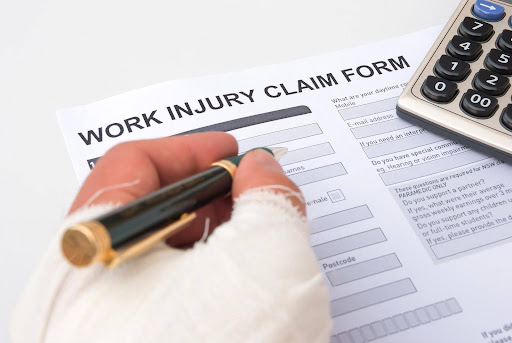
Running a business is expensive, as today’s corporate landscape is full of hidden fees, expenses, and other complications. Many business owners, particularly small business owners, can feel overwhelmed by the scope of the fees and payments they must manage. This becomes increasingly relevant when workers’ compensation insurance becomes a factor. Once businesses reach a certain size, they must purchase workers’ compensation insurance to ensure their employees are protected in case of a workplace injury.
As with personal insurance policies, premiums are not fixed. The cost of workers’ compensation for employers may vary based on the incident rate in their facilities. However, unlike personal insurance, this rate is not so simple to determine, as many factors may influence how a business is rated. The rate that workers’ compensation insurance companies use to determine premiums is called the experience modification rate (EMR). Researching the factors that can influence it could help business owners reduce their premium costs.
A skilled New York workers’ compensation attorney from Schwab & Gasparini may be able to help explain the experience modification rate and present strategies to obtain better premiums with safety training. Consider scheduling a free, no-obligation consultation by calling (315) 422-1333 for Syracuse, (518) 591-4664 for Albany, (914) 304-4353 for White Plains, or (914) 304-4353 for Hudson Valley.
What is the Experience Modification Rate?
Similar to how a credit score determines how an individual interacts with debt, an experience modification rate in New York determines the safety of a company’s workplace and the risk an insurance company assumes when insuring them. Evaluators will rate a company based on the safety of the workplace and the number of workers’ compensation claims within a certain period. The frequency of workplace injuries and the number of workers’ compensation claims could increase a business’s experience modification rate, and their EMR could impact what they must pay for insurance premiums.
Calculating Experience Modification Rate
This may lead many business owners to wonder how the experience modification rate is calculated. A business’s EMR is based on the average of other businesses in the same industry. This classification is determined based on the industry in which the business functions and its payroll. The actual rate in New York is determined by a complex formula presented by the New York Compensation Insurance Rating Board. However, in simpler terms, the rate is calculated by taking into account actual and expected losses and determining the risk of the insurance company from there. This number is then translated into the cost of the insurance premiums for workers’ compensation for employers.
Impact of Workers’ Compensation Claims
Generally, businesses are assigned a value based on the risk an insurance company may assume. The average risk for a given company is generally 1.0. Increased risk will lead to a higher rating and higher insurance premiums, and decreased risk may lead to lower premiums. If a company has a high workplace injury rate, and therefore a high volume of workers’ compensation claims, its rating may increase. A company’s rating is reevaluated after a certain period, generally every three years.
For more detailed information about experience modification rates, consider speaking with a skilled New York workers’ compensation attorney from Schwab & Gasparini.
How Does EMR Affect Workers’ Compensation?
Employers may benefit from an in-depth understanding of the experience modification rate in New York, as it may impact the cost of their workers’ compensation premiums. A high volume of claims indicates a high rate of injury and risk. As the insurance company will be expected to pay out these claims, they may charge a higher rate for premiums for companies with a high experience modification rate. This greatly impacts workers’ compensation for employers, as the quality of their employees’ experiences may directly correlate to costs incurred by the company. Business owners may benefit from finding strategies to decrease workplace incidents, thereby reducing their experience modification rate.
Workplace Safety Training
One of the key strategies for decreasing a company’s experience modification rate is to implement safety training practices. Employee safety training can help reduce accidents and injuries in the workplace, which could improve employee morale, prevent catastrophic injuries, and save time, money, and the company’s reputation. Many of these safety training resources are required by the Occupational Health and Safety Administration. Additionally, once these safety programs are instituted, they can continue to benefit and protect a company as long as the standards are adhered to.
Frequently Asked Questions
Listed below are several frequently asked questions regarding experience modification rates for workers’ compensation insurance for employers.
Is The Experience Modification Plan Mandatory in New York?
While not every business owner will be eligible for the experience modification plan, the program is mandatory for those entities that qualify for it. The Rating Effective Date is often a key factor in determining whether a business is eligible for an EMR, and is generally determined by when the plan was purchased. However, Rating Effective Dates may not be the same as the date that the insurance policy takes effect.
What is the Average Experience Modification Rate (EMR) for a New York Business?
Each field of work assumes different risks and has unique hazards inherent to the job. Therefore, experience modification rates are not standardized across different industries. Each average experience modification rate is calculated for a specific field. Once this is calculated, the relevant authorities set this average as 1.0. This is the average experience modification rate for that specific field of work.
Speak to a New York Business Attorney For More
Experience modification rates for workers’ compensation can be an opaque and confusing subject matter, shrouded in legal terminology and jargon. Business owners may be tempted to ignore the issue altogether and take the cost as it comes. Ignoring the issue, however, is not the solution. A high experience modification rate could cost the business thousands of dollars every time the workers’ compensation insurance is renewed. With care and legal knowledge, business owners can overcome these obstacles and optimize their EMR, potentially saving them thousands.
Additionally, implementing workplace safety training requirements and equipping employees to deal with workplace hazards can improve the functioning of the business as a whole. Consider speaking with an experienced workers’ compensation attorney from Schwab & Gasparini to learn how to improve a business’s EMR. Call the office for a free consultation today at (315) 422-1333 for Syracuse, (518) 591-4664 for Albany, (914) 304-4353 for White Plains, or (914) 304-4353 for Hudson Valley.
Syracuse
109 South Warren Street
Suite 306
Syracuse, NY 13202
Phone: 315-422-1333
Fax: 315-671-5013
White Plains
White Plains, NY
Phone: 914-304-4353
Fax: 914-304-4378
Hudson Valley
1441 Route 22
Suite 206
Brewster, NY 10509
Phone: 914-304-4353
Fax: 914-304-4378
Albany
17 Elk Street
Albany, NY 12207
Phone: 518-591-4664
Fax: 315-671-5013
© Copyright 2026 Schwab & Gasparini. All Rights Reserved. Sitemap | Legal | Law Firm Internet Marketing by Law Firm Essentials